Arduino
-

Arduino Buzzer: How to Make It Buzz Super Mario Sounds
Interest in Arduino has inspired creative projects like arduino buzzer how to make it buzz super mario reddit?connect a piezoelectric buzzer, code its tones, and adjust the frequencies to mimic the game’s theme. This project gives hands-on experience with frequency modulation, pulse-width logic, and sound synthesis. Its popularity links education with the fun of recreating…
-
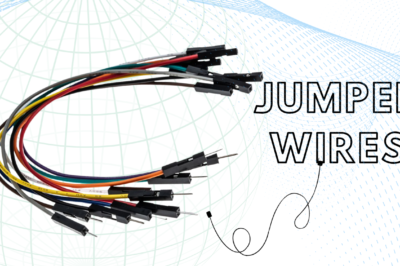
Jumper Wires: The Ultimate Beginner-Friendly Guide for Electronics Projects
Electronics prototyping in the United States has evolved rapidly over the last two decades, largely due to readily available components that enable experimentation without soldering. Jumper wires are at the core of this shift, acting as the essential connectors for DIY circuits, educational robotics, and prototypes. They bridge the gap between a circuit diagram and…
-
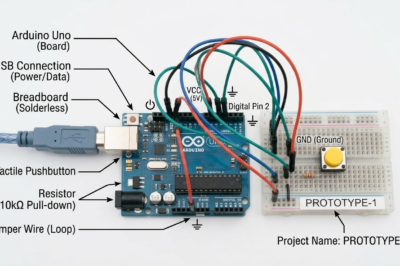
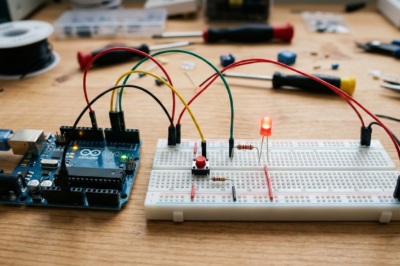
Arduino Button: Complete Guide for Beginners and DIY Projects
An Arduino button (pushbutton) is a simple input device. When pressed, it completes a circuit and sends a signal to your Arduino, letting you interact with your project. Use it as a doorbell, light switch, or for many other DIY ideas. Learning to wire and code an Arduino button opens the door to many fun…
-
5 Amazing Push Button Light Switch Ideas for a Modern Home
Push button light switches blend nostalgia and modern innovation. Pressing the button closes the circuit, turning the light on or off with less effort than a toggle switch. Popular in the early 1900s, updated versions now complement today’s smart homes and décor. For more details, see the official documentation at Arduino resources. A push button…
-
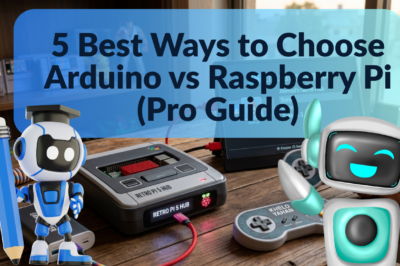
5 Best Ways to Choose Arduino vs Raspberry Pi (Pro Guide)
If you’re starting with electronics, robotics, or DIY tech projects, you’ve likely seen the Arduino vs Raspberry Pi debate. But which one should you use? While they might seem similar at first glance, Arduino and Raspberry Pi serve very different purposes. One is a microcontroller designed to control hardware directly, while the other is a…
-
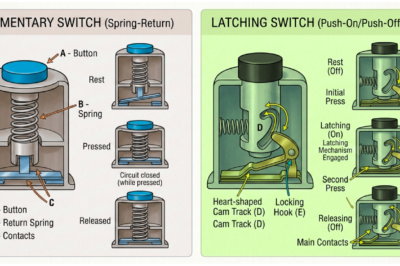
7 Proven Tips for Using a Push Button Switch Today
The Tactile Revolution: Why the Push Button Switch Still Rules Think about the last time you started your car, brewed a cup of coffee, or hopped on an elevator. You likely interacted with a push button switch without even thinking about it. These little components are the unsung heroes of the modern American home and…
-
Arduino Kit Explained (101 Ultimate Guide): What You Get, How It Works, and What You Can Build
Want to learn electronics or build robots? If you’re a student, educator, parent, or hobbyist, an Arduino kit is an easy, affordable way to start. With simple instructions and endless projects, you can quickly build a circuit or robot at home. Arduino kits are fun for all ages and skill levels. For more details, see…
-
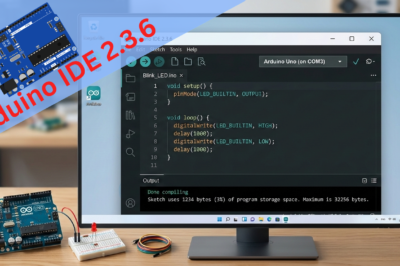
Getting Started with Arduino IDE 2.3.6: Tips, Tricks, and Post-Build Secrets
This guide presents the key features of Arduino IDE 2.3.6. It offers practical tips on advanced tools, troubleshooting, and sourcing equipment for both experienced engineers and beginners. This guide will first examine the core features of version 2.3.6, then address advanced tasks such as post-build actions, and finally provide recommendations for sourcing equipment in New…
-
The Ultimate Guide to the Arduino Socket Cable: Getting Connected the Right Way
You are finally ready to begin your project, but you realize you’re missing one vital link: the Arduino socket cable. Maybe you’re building a smart thermostat for your place in Denver, or you’re automating the garage door at your home in Cali. Or, perhaps it’s a last-minute science fair project sitting on the kitchen table…
-
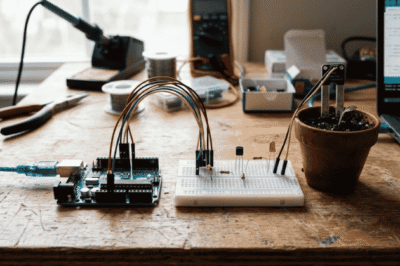
23 Arduino Projects That Solve Real Problems (Beginner to Advanced)
Author Note: I have been building with Arduino boards for close to eight years, starting with a $20 Uno kit and a lot of burnt fingers. Every project below has been built and tested by hand, not copied from a spec sheet. Arduino projects are the fastest way to turn a $20 board into something…


Follow Us
Recent Posts

Categories
- Arduino 30
- ESP32 21
- Technology 7
Tags
192.168.4.1 Arduino arduino 2.3.6 postbuild arduinocraft Arduino ESP-NETIF Arduino IDE 2.3.6 Arduino Kit arduino project ideas that solve a real world problem advanced arduino projects Arduino Robot Kit Arduino Socket Cable Circuit Diagram Maker coding esp32 arduino wifi password legal characters Games how to create a base64 encoded string in arduino json How to use the Bluetooth Module How to use the Bluetooth Module (HC-05) How to use the Bluetooth Module (HC-05) with Arduino nicco robot puppy realistic robot puppy Robotics Funding Robotics Funding News robot puppies robot puppy robot puppy toy Technology VSCP What Is Arduino? wuffy robot puppy