
Last Updated: August 14, 2026
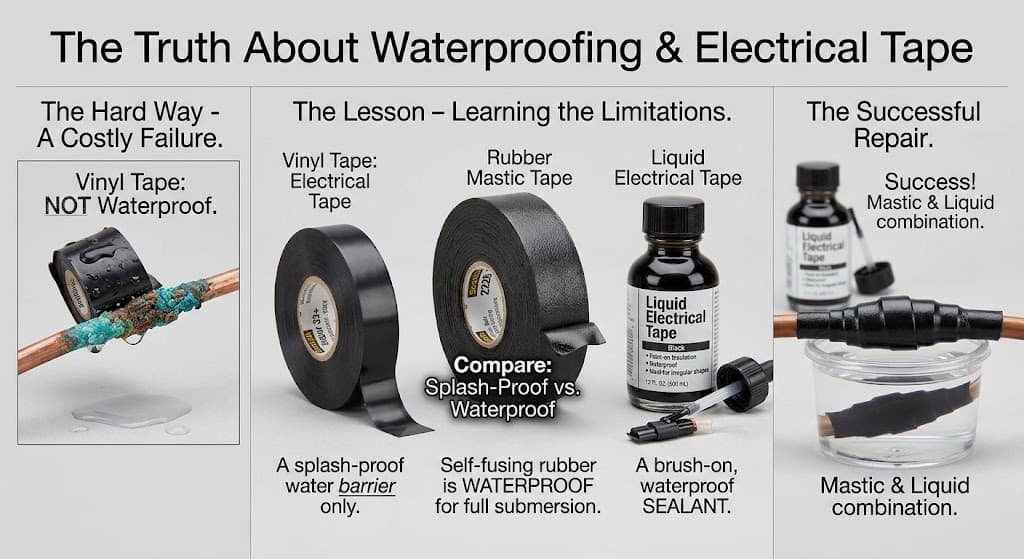
Is electrical tape waterproof? Mostly, no. Standard vinyl electrical tape is water-resistant, not waterproof — it can handle a splash or light rain for a short while, but it will eventually let moisture in through the seams and edges, especially if it’s wrapped around a rough or dirty wire.
I found this out the expensive way, on a project that had nothing to do with plumbing or roofing. It was an Arduino soil moisture sensor sitting in a garden bed.
Waterproof vs. Water-Resistant: The Real Difference
These two words get used like they mean the same thing. They don’t.
Water-resistant means a material slows water down. Given enough time, or enough pressure, water still gets through.
Waterproof means water is fully blocked out, even with prolonged contact.
Regular black vinyl tape, the kind sold at every hardware store, is water-resistant. It’ll shrug off a quick rain shower. Leave it buried in mulch or sitting in a puddle for a season, though, and it fails.
There are tapes that earn the “waterproof” label honestly — rubber mastic tape, self-fusing silicone tape, and liquid electrical tape all cure into a sealed, seamless layer that water genuinely can’t pass through. More on those in a minute.
My Outdoor Arduino Project That Went Wrong
Last spring I built a simple garden monitor: an Arduino Uno, a capacitive soil moisture sensor, and a jumper wire extension running from the enclosure to the sensor buried near my tomatoes.
I spliced the extension wire, wrapped it in a few layers of black electrical tape, and called it weatherproof. It wasn’t.
Three weeks later the readings went haywire — jumping from “bone dry” to “flooded” with no rain in between. I dug up the splice and found green corrosion creeping up the copper strands under the tape. Water had wicked in along the wire itself, not even through a gap in the wrap.
Key takeaway: Electrical tape can look perfectly sealed on the outside and still let moisture travel in along the wire strands underneath it. Wrapping tightly isn’t the same as sealing.
I ended up redoing that splice with heat shrink tubing and a dab of dielectric grease, and it’s been solid ever since. I wrote up the full rebuild, wiring diagram included, over on [internal link — Arduino outdoor sensor waterproofing guide].
What Actually Happens When Water Gets In
Once moisture reaches bare copper, three things happen, usually in this order.
- Oxidation starts. Copper turns green or dull, and resistance at the joint climbs.
- Signal drift shows up. Sensors report inconsistent or drifting values, which is exactly what fooled me at first.
- Full failure follows. Eventually the connection opens up completely, or in a mains-powered circuit, it can create a short.
For a low-voltage Arduino project, a failed splice mostly means a frustrating debugging session. For household wiring or anything plugged into a wall outlet, the same failure mode is a real safety hazard.
Types of Electrical Tape (And Which Ones Are Actually Waterproof)
Not every roll on the shelf does the same job.
- General-purpose vinyl tape (Scotch Super 33, Temflex): water-resistant, fine for dry indoor splices, not meant for burial or standing water.
- Rubber mastic tape (3M Scotch 2228): self-sealing and genuinely waterproof once wrapped tightly over itself, commonly used by electricians outdoors.
- Self-fusing silicone tape: melts into a single rubber layer with no adhesive seams, making it one of the most reliable waterproof options for outdoor or automotive wiring.
- Liquid electrical tape: brushed or dipped on, cures into a flexible, fully sealed coating that follows every contour of the connection.
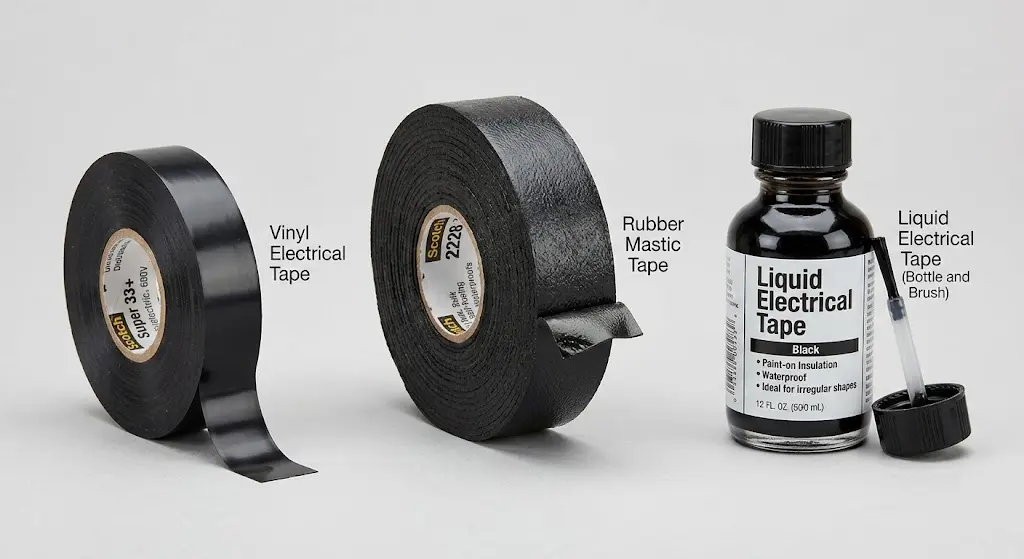
If a connection is going outside, underground, or anywhere near standing water, skip plain vinyl and reach for one of the three above.
A Quick Arduino Sketch to Catch Corrosion Before It Kills a Connection
After the tomato incident, I added a simple sanity check to my sketch. It watches for the exact kind of erratic jump I saw and flags it before I lose a week of readings to a bad splice.
cpp
const int sensorPin = A0;
int lastReading = 0;

void setup() {
  Serial.begin(9600);
  lastReading = analogRead(sensorPin);
}

void loop() {
  int reading = analogRead(sensorPin);

  // Flag sudden, physically unlikely jumps — often a sign of
  // a corroding or failing splice rather than an actual moisture change
  if (abs(reading - lastReading) > 300) {
    Serial.println("Warning: check wiring, sudden sensor jump detected");
  }

  lastReading = reading;
  Serial.println(reading);
  delay(2000);
}
It’s a small piece of code, but it’s saved me from chasing “impossible” readings more than once. I keep this and a few other outdoor-build tricks documented over on www.arduinocrafte.com, if you want the full sensor calibration walkthrough alongside it.
How I Waterproof Wire Connections Now
This is the process I use for anything going outdoors, buried, or near moisture.
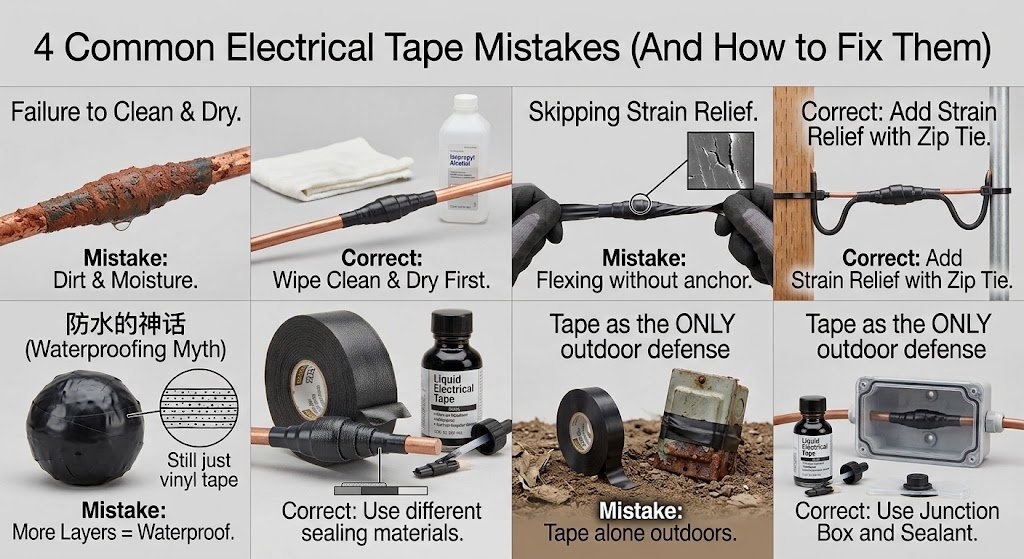
- Clean and dry the wire first. A quick wipe with isopropyl alcohol removes oil and grime the tape or heat shrink needs to bond to.
- Solder the splice rather than just twisting the wires, so there’s no gap for water to wick into.
- Slide on adhesive-lined heat shrink tubing before soldering, then shrink it over the joint once it’s cool.
- Add a layer of self-fusing silicone tape over the heat shrink for extra insurance on anything permanent or buried.
- Skip plain vinyl tape entirely for outdoor splices — save it for the dry, indoor stuff it’s actually built for.
This takes maybe five extra minutes per splice. It’s a lot cheaper than digging up a garden bed twice.
When Regular Electrical Tape Is Fine
None of this means vinyl tape is a bad product. It’s the right tool for a huge range of jobs.
Indoor wiring, temporary automotive fixes, bundling wires inside a dry enclosure, color-coding circuits — vinyl tape handles all of that well, and it’s what I still reach for on my breadboard projects on the workbench.
The trouble only starts when it gets asked to do a waterproof job it was never designed for.
Mistakes Beginners Make With Electrical Tape
A few patterns show up again and again with new hobbyists and DIYers.
- Wrapping over dirty or wet wire. Tape needs a clean, dry surface to actually bond.
- Assuming more layers equal more waterproofing. Extra wraps of vinyl tape are still vinyl tape.
- Skipping strain relief. A splice that flexes repeatedly will crack its seal faster than one that’s anchored.
- Using tape as the only protection outdoors. Tape should be a layer, not the whole defense.
FAQs
Is 3M electrical tape waterproof? Standard 3M vinyl tape like Super 33 is water-resistant, not waterproof. 3M’s rubber mastic and self-fusing silicone tapes are the waterproof options in their lineup.
Can I use electrical tape underwater? No. Even tapes marketed as waterproof are meant for sealed splices exposed to moisture, not submersion. For underwater connections, use waterproof wire connectors rated for that purpose.
How long does waterproof electrical tape actually last outdoors? Rubber mastic and silicone tape typically hold up for several years outdoors if applied over a clean, dry connection. Vinyl tape in the same conditions often fails within months.
Does heat shrink tubing work better than tape? For a permanent outdoor or buried splice, yes. Adhesive-lined heat shrink creates a sealed barrier with no seams, which is harder for water to work into than a taped wrap.
Conclusion
Is electrical tape waterproof? The honest answer is that most of it isn’t, and treating it like it is will eventually cost you a connection, a sensor reading, or worse.
Vinyl tape earns its keep indoors and in dry, temporary fixes. Anything headed outside, underground, or near moisture deserves rubber mastic tape, self-fusing silicone, or a proper heat-shrink-and-solder splice instead.
CTA: Building your own outdoor Arduino sensor setup? Check the wiring guide and full sensor build notes at www.arduinocrafte.com before you bury that first splice.






Leave a Reply